When Does a Landlord Need a Gas Safety Certificate? New Tenancies, Portfolios and HMOs
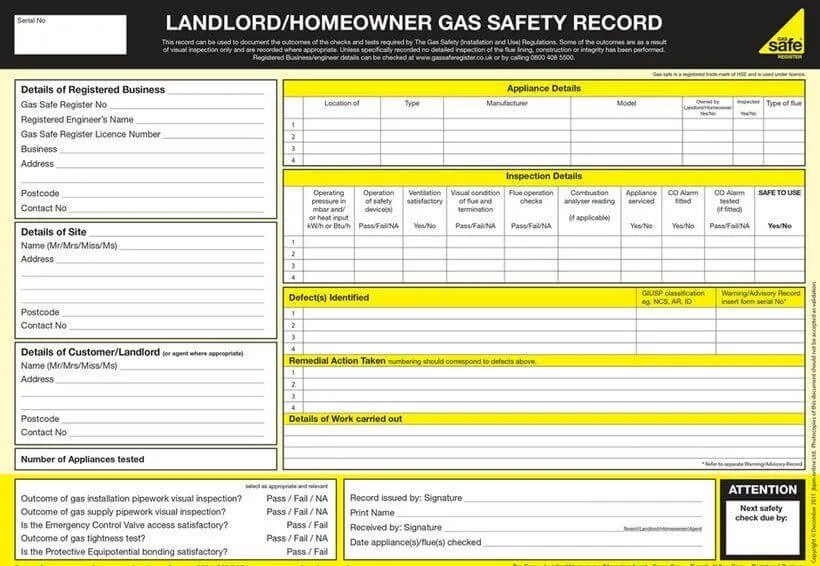
A comprehensive guide to the legal timing and renewal rules for a landlord's annual Gas Safety Certificate (CP12).
The 12-month rule is the same for every landlord; this guide looks at how it applies to a new tenancy, to a portfolio with renewal dates spread across the year, and to an HMO. For the renewal rules on their own, including the two-month early renewal window, see how often a landlord gas safety certificate needs renewing.
The Baseline 12-Month Rule
The fundamental legal requirement is clear: a Landlord Gas Safety Certificate (CP12) is valid for a maximum of 12 months from the date it was issued. This 12-month period is strict and applies to all rented residential accommodation with gas appliances supplied by the landlord. The date of expiry is clearly stated on the certificate document itself. Landlords must ensure a new, valid certificate is obtained before the expiry of the current one to remain compliant with the Gas Safety (Installation and Use) Regulations. It is a legal requirement to provide a copy of the current certificate to your tenant within 28 days of the inspection, and to a new tenant before they move in.
The "Up to 2 Months Early" Renewal Window
A useful provision allows landlords to renew their Gas Safety Certificate up to two months before the existing certificate's expiry date without losing any validity period. This early renewal is particularly valuable for aligning renewal dates for administrative convenience. When renewed early, the new certificate’s 12-month validity period begins from the date of the new inspection, not from the expiry date of the old one. For example, a certificate expiring on 1st August could be renewed on or after 1st June, with the new certificate valid from the date of inspection in June for a further 12 months. This allows landlords to group inspections for multiple properties or secure an appointment more easily without the risk of missing the deadline.
New Tenancy Scenario
If a new tenant is moving into a property, the landlord must provide them with a valid Gas Safety Certificate before the tenancy starts. If the existing certificate is still in date, you simply give the new tenant a copy. If the current certificate expires during the new tenancy, you must ensure it is renewed before that expiry date. Crucially, if the certificate has expired when a new tenant is due to move in, you cannot let the property until a new inspection has been carried out and a valid certificate is in place. There is no grace period. The process for arranging an inspection and certificate remains the same, with a typical UK price range (industry average) for a CP12 for one appliance being £60-£90 (around £80 on average).
Portfolio and Staggered Renewal Dates
Landlords with multiple properties often find themselves managing a calendar of different certificate expiry dates spread throughout the year. This can be administratively burdensome and increases the risk of a missed renewal. Using the "up to two months early" renewal window strategically can help group properties into batches. For instance, if you have properties with expiry dates in July, August, and September, you could arrange inspections for all three in June. While you effectively "lose" a small amount of validity on the certificates for the July and August properties, the benefit of having a single, memorable renewal date for a batch of properties often outweighs this, improving compliance management.
HMO and Multi-Occupancy Properties
The same annual CP12 rule applies per property, regardless of how many individual tenants or households reside within it. A House in Multiple Occupation (HMO) with, for example, five separate lettings still requires one Gas Safety Certificate for the property as a whole, covering all the gas appliances supplied by the landlord within it. The certificate must be renewed every 12 months, and a copy must be provided to each tenant, or in a practical sense, displayed prominently in a common area. The inspection will check all relevant appliances, such as boilers, cookers, and gas fires, in every part of the property that the landlord is responsible for. The typical price in London and the South East is £85-£120 for a standard property, and a certificate covering two or more appliances often costs £110 or more.
What Happens if You Miss a Renewal Date
Missing the renewal date is a serious breach of your legal duties as a landlord. If the certificate expires, you must act immediately. You should book a Gas Safe registered engineer for an inspection at the earliest possible opportunity; you cannot wait for a "convenient" time. The property is not legally compliant until a new certificate has been issued. You must not allow tenants to use gas appliances you are responsible for until they have been checked and deemed safe. Failing to have a valid certificate can lead to enforcement action from the local authority or the Health and Safety Executive, potentially including substantial fines and, in the most serious cases, prosecution. Furthermore, most boiler manufacturers require an unbroken annual service record to keep a warranty valid, and an expired certificate can complicate warranty claims.
Frequently asked questions
Can I just get a gas safety check without an annual boiler service?
Yes, a Gas Safety Certificate (CP12) inspection is a legal check of safety, while a service is a more thorough maintenance check. However, they are often combined for efficiency. Most boiler manufacturers require an unbroken annual service record to keep a warranty valid, so skipping the service may invalidate your boiler's warranty. The typical UK price range (industry average) for an annual combi boiler service is £80-£120.
Who is legally allowed to carry out a landlord gas safety check?
Only a Gas Safe registered engineer is legally permitted to carry out work on gas appliances in the UK, including performing a landlord gas safety inspection and issuing a valid CP12 certificate. You must check the engineer's Gas Safe ID card to confirm they are registered and that their registration covers the specific type of appliance they will be checking, such as boilers or cookers.
What if an appliance fails the safety check during the inspection?
If an appliance is found to be unsafe or 'At Risk', the engineer will advise that it must not be used until the necessary repairs are made. They will issue a warning notice. You must arrange for a Gas Safe registered engineer to carry out the repairs. Once fixed, you should obtain a new Gas Safety Certificate for the property. Pricing for repairs like expansion vessel replacement or PRV replacement is confirmed by quote once the engineer knows the make, model, and what is needed.