What Happens During a Gas Safety Certificate Inspection
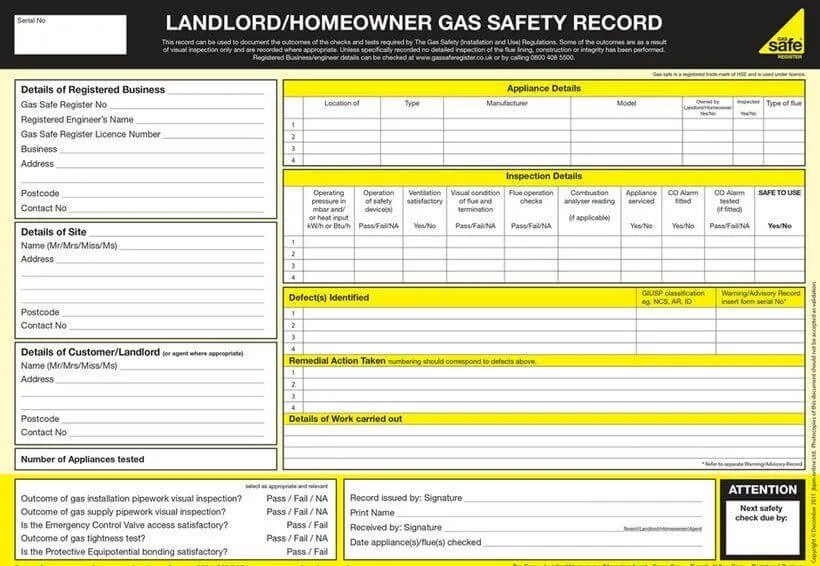
A detailed walkthrough of every step a Gas Safe engineer takes during a Landlord Gas Safety Certificate (CP12) inspection.
This walks through the inspection visit itself, one appliance at a time. For what the finished certificate records and how it reaches your tenants, see what a CP12 is and what it records.
Checking the Boiler
The boiler is the primary appliance inspected during a Landlord Gas Safety Certificate visit. The engineer will visually inspect the boiler and its immediate surroundings for any signs of damage, corrosion, or inadequate ventilation. They will check the case seals are intact and that there are no signs of spillage from the flue. A key part of the inspection involves checking the boiler's operating pressure and ensuring it is within the green or normal range on the gauge, as per the manufacturer's manual.
The engineer will then perform a series of tests using specialised equipment. This includes checking for any gas leaks from the pipework and connections to the appliance. They will test the flue gases to ensure the boiler is burning fuel correctly and efficiently, and that the products of combustion are being safely expelled outside. They will also verify the safety devices, such as the flame failure device, are operating correctly to shut off the gas supply if the flame goes out. This check is distinct from a full boiler service, which is a more in-depth maintenance task. The typical UK price range for an annual combi boiler service is £80 to £120 (industry average).
Inspecting Any Gas Fire
If the property has a gas fire, log burner, or any other type of decorative fuel-effect gas appliance, this will be thoroughly inspected. The engineer will check the fire is securely fitted and that the hearth and surround are in good condition. They will inspect the fire's controls to ensure they operate safely and correctly, and check for any blockages in the burner or pilot assembly.
A crucial safety test involves checking the flue or chimney for the fire. The engineer will verify it is clear and capable of removing combustion gases. They will perform a spillage test to ensure fumes are being drawn up and out of the room effectively and are not spilling back into the living space. The fire's flame picture will be assessed to confirm it is burning correctly with a stable blue flame, and all safety cut-off devices will be tested.
Testing a Gas Hob or Cooker
For any gas hob or cooker that is included as part of the rented accommodation, a safety check is mandatory. The engineer will start with a visual inspection of the appliance, its flexible hose (if fitted), and the isolation valve. They will check the hose is in good condition, is not perished or cracked, and is not stretched or trapped. The stability of freestanding cookers will also be checked.
Each burner, including the grill and oven, will be ignited to check they light properly and that the flames are the correct colour and size. The engineer will test that all the controls turn smoothly and that the flames extinguish immediately when turned off. A tightness test is performed on the gas supply to the appliance to confirm there are no leaks from the connections or the internal gasways of the hob or cooker itself.
Examining a Separate Gas Water Heater
Some properties, particularly older ones, may have a gas-fired water heater that is separate from the main boiler, such as an instantaneous multipoint heater or a storage water heater. This appliance will undergo its own set of checks. The engineer will inspect the unit for general condition and signs of distress, like sooting or heat damage.
They will check the water and gas connections for leaks and test the operational controls. A flue gas analysis will be carried out to ensure safe combustion, and the flue terminal will be inspected to ensure it is correctly located and not obstructed. The thermostat and any overheat safety devices will also be verified as functional. For unvented hot water cylinders, a separate, more detailed service is recommended, for which pricing is confirmed by quote once the engineer assesses the specific model and its requirements.
Checking the Flues for Each Appliance
Every gas appliance that burns fuel requires a way to exhaust the potentially dangerous fumes outside. Checking these flues is a critical part of the safety inspection. For each appliance, the engineer will trace the entire visible length of the flue, both inside and outside the property.
They are checking that the flue is properly supported and sealed, with no holes, gaps, or signs of corrosion. They will ensure the flue terminal outside is clear of obstructions like bird nests, leaves, or debris, and that it is positioned correctly away from windows, air vents, or boundaries as per regulations. The engineer will also confirm that any flue passing through a cupboard, ceiling, or another room is adequately enclosed to prevent fumes leaking into the living space. A spillage test is performed to prove the flue is drawing correctly.
If Something Fails, and Issuing the Certificate
If any appliance or its flue fails any part of the safety check, the engineer is legally obligated to take action. They will explain the fault to the landlord or agent. For a minor issue that does not pose an immediate danger, they may issue a warning notice advising it needs repair. For a fault deemed 'immediately dangerous' or 'at risk', the engineer will turn off the gas supply to that specific appliance and will likely cap the gas line to it. The appliance must not be used until a qualified Gas Safe engineer has repaired it and confirmed it is safe.
Once all checks are complete and any necessary actions taken, the engineer will issue the Landlord Gas Safety Certificate (CP12) if the installation is deemed safe. This document lists every appliance checked, its location, the tests performed, and their results. It includes the engineer's Gas Safe registration details and the date of the inspection. The certificate is valid for 12 months, and by law, a copy must be given to existing tenants within 28 days and to new tenants before they move in. The typical UK price range for a CP12 for one appliance is £60 to £90 (industry average), with prices often higher in London and the South East.
Frequently asked questions
Is a Gas Safety Certificate the same as a boiler service?
No, they are different. A CP12 Gas Safety Certificate is a legal inspection to confirm appliances are safe to use. A boiler service is a more thorough maintenance task recommended by manufacturers to keep the boiler efficient and to maintain its warranty. A service alone does not fulfil the legal requirement for a CP12.
Who is legally allowed to carry out a CP12 inspection?
Only a Gas Safe registered engineer is legally permitted to work on gas appliances, including performing Landlord Gas Safety Certificate inspections. You should always check the engineer's Gas Safe ID card before they begin any work.
What if my boiler fails its safety check?
If an appliance is found to be dangerous, the engineer will disconnect it from the gas supply to make it safe. You must then have it repaired by a Gas Safe engineer before it can be used again. Once repaired, a new safety check should be performed for that appliance. Pricing for repairs is confirmed by quote after diagnosis.