What a Gas Safe Engineer Checks: Flue, Combustion and Safety Devices
Discover exactly what a Gas Safe engineer checks during a full annual boiler service, from internal components to safety devices.
This goes through the technical checks an engineer makes inside and around the boiler, and what each one is looking for. For a shorter overview of what a service should include and how to judge the company doing it, see our guide to what a boiler service should include.
1. The Boiler's Internal Components
A comprehensive service starts inside the boiler casing. The engineer will open the unit to access and inspect the main components that are crucial for safe and efficient operation. This includes a visual and physical check of the main heat exchanger, the component that transfers heat from the burner to your water. They look for any signs of sooting, corrosion, or cracks that could lead to leaks or carbon monoxide production.
The engineer will also check all seals and gaskets for integrity to ensure no combustion gases can escape into your home. The ignition system, whether it is a traditional pilot light or electronic ignition, is tested to verify it lights the burner correctly and reliably. The burner itself is cleaned to remove any dust or debris that could affect the flame pattern, and the electrode is checked for correct positioning and wear.
2. Flue and Ventilation
This is a critical safety check. The engineer will inspect the entire length of the flue, both inside and outside your property, to ensure it is securely fitted, correctly routed, and free from any blockages, corrosion, or damage. The flue is responsible for safely expelling the products of combustion, including carbon monoxide, to the outside air. Any compromise here is a serious risk.
They will also verify that the terminal, where the flue exits the wall or roof, is clear of obstructions like bird nests, leaves, or frost. The air vents around the boiler, which provide oxygen for combustion, are checked to ensure they are not blocked or covered. Proper ventilation is essential for the boiler to burn gas safely and efficiently.
3. Combustion Analysis
This is a key technical part of a proper service. The engineer will use a flue gas analyser, a specialised electronic device, to take readings from the boiler's flue. This device measures the ratio of gases being produced, primarily checking the levels of carbon monoxide (CO) and carbon dioxide (CO2), and the overall combustion efficiency.
The analyser provides precise data on whether the boiler is burning gas correctly. If the CO levels are too high, it indicates incomplete combustion, which is a safety hazard. The readings also show if the boiler is running efficiently or wasting gas. Based on the results, the engineer can make fine adjustments to the gas valve to optimise the burner's performance, ensuring it is both safe and cost-effective to run.
4. Safety Device Testing
A modern boiler contains several built-in safety devices that must be tested to confirm they will operate in an emergency. The engineer will manually test these to ensure they function as intended. This typically includes checking the flame failure device, which should cut the gas supply if the flame goes out unexpectedly.
They will also test the boiler's overheat thermostat, which should shut the system down if it gets dangerously hot. For system and regular boilers with a hot water cylinder, the engineer may check the operation of the thermostat and high-limit cut-out on the cylinder. All these tests are performed methodically to verify the boiler will fail safely if a problem occurs.
5. General Condition and Visible Signs of Wear or Corrosion
Beyond the specific components, the engineer conducts a general assessment of the boiler and its immediate pipework. They look for any signs of water leaks, corrosion on pipes or valves, and any unusual noises or vibrations when the boiler is running. The case seals are checked again to ensure they are intact after reassembly.
The pressure relief valve discharge pipe is inspected to ensure it is not blocked and terminates in a safe location. The engineer will also check the system pressure by looking at the gauge, ensuring it is within the green or normal operating range as specified in the manufacturer's manual. They will note the general age and condition of the boiler and may advise on any ancillary components, like the thermostat or timer, that appear faulty.
6. The Written Record and Why It Matters
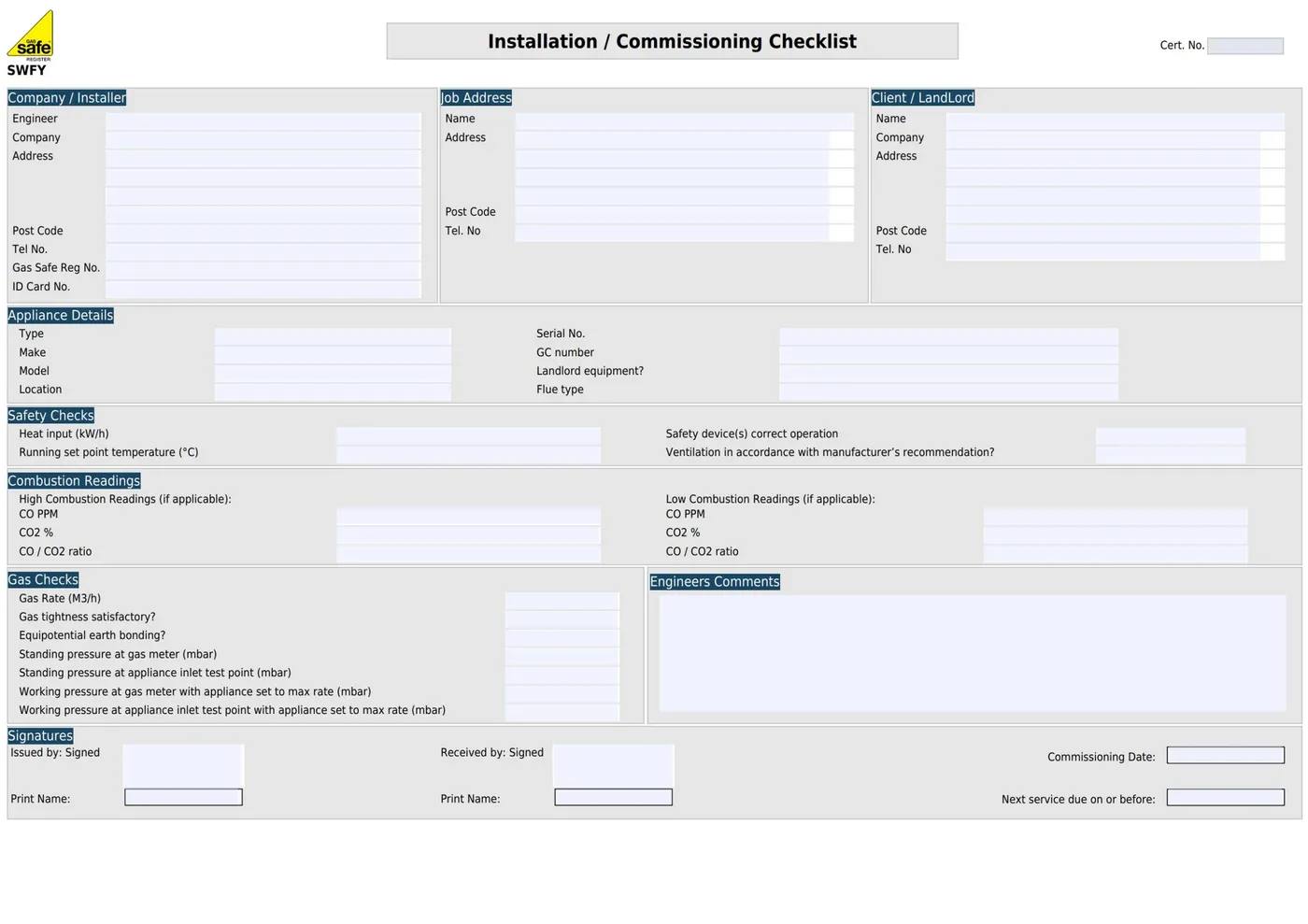
At the end of the service, you should receive a written report. For a standard homeowner service, this is often a service record sheet or checklist. For a landlord, this is the legally required Landlord Gas Safety Certificate (CP12). This document is not just a receipt, it is a vital record.
It will detail what checks were performed, the results of the combustion analysis (often with printed readings), any defects found, and any remedial actions taken or recommended. Keeping this record is essential for two main reasons. First, most boiler manufacturers require proof of an annual service by a Gas Safe engineer to keep the warranty valid. Second, for landlords, providing a valid CP12 to tenants within 28 days of the check is a legal requirement, and it must be renewed every 12 months. A thorough record gives you peace of mind and proof of compliance.
Frequently asked questions
How much does a boiler service cost?
For an annual combi boiler service, the typical UK price range (industry average) is £80 to £120. In London and the South East, prices can be towards the higher end of that scale. Pricing for any additional repair work, like replacing a component, is confirmed by quote once the engineer has assessed the specific make and model and identified what is needed.
Is a Gas Safety Certificate (CP12) the same as a boiler service?
No, they are related but different. A full boiler service is a thorough maintenance check that includes cleaning, testing, and adjustments. A Landlord Gas Safety Certificate (CP12) is a legal inspection to confirm an appliance is safe to use at that moment. A service can be more comprehensive, but a CP12 inspection alone does not constitute a full service. Landords are legally required to have a CP12 done annually for each gas appliance.
Who is legally allowed to service my boiler?
In the UK, anyone who works on a gas appliance must be legally registered with the Gas Safe Register. You should always ask to see the engineer's Gas Safe ID card before any work begins. This is a legal requirement for your safety and is also necessary to maintain your boiler's manufacturer warranty, which typically requires an annual service by a Gas Safe registered engineer.