Do Homeowners Need a Gas Safety Certificate? Landlord vs Owner-Occupier Explained
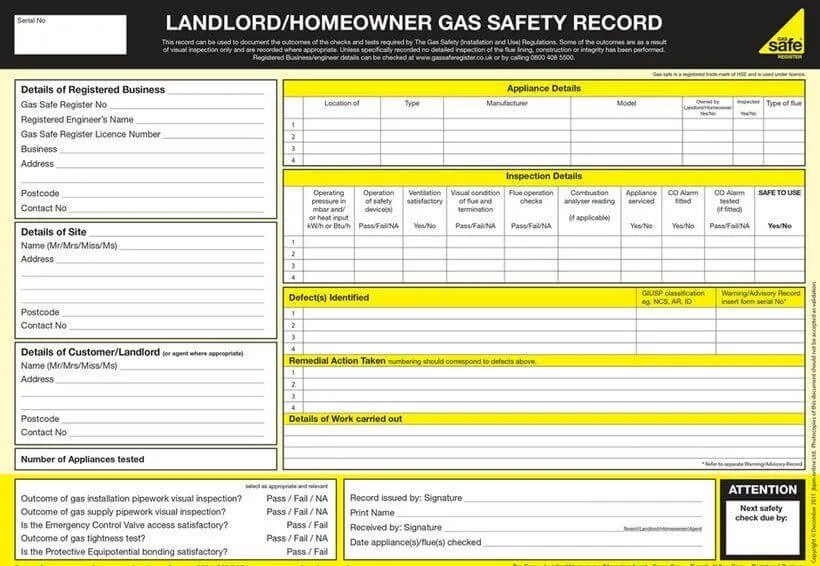
If you own and live in your home, you don't legally need a Landlord Gas Safety Certificate (CP12), but understanding the difference is key to safety and compliance.
The Direct Answer: Homeowners Have No Legal Requirement for a CP12
If you own and live in your own property, there is no legal obligation for you to hold a Landlord Gas Safety Certificate, commonly known as a CP12. This specific certificate is a mandatory requirement under the Gas Safety (Installation and Use) Regulations 1998, but it applies only to landlords who are letting a property to tenants. As an owner-occupier, you are not bound by this particular piece of legislation. The law recognises that you are responsible for your own safety within your home, and it does not compel you to obtain this annual certificate in the same way it does a landlord.
Why Annual Safety Checks Are Still Recommended for Owner-Occupiers
While the law does not require it, having your gas appliances, especially your boiler, checked annually by a Gas Safe registered engineer is strongly recommended for your safety. The risks that the landlord legislation aims to mitigate for tenants are the same risks you face in your own home. A professional service or safety check can identify dangerous issues like carbon monoxide leaks, faulty combustion, or ventilation problems that you might not notice. Catching faults early during an annual check can also prevent more expensive, catastrophic breakdowns later. This is a safety recommendation, not a legal requirement, but it is a critical one for protecting your household.
Landlord vs Homeowner: A Clear Side-by-Side Contrast
Understanding the distinction between legal duties and best practices is essential.
What a Landlord is Legally Required to Do
- Arrange an annual gas safety check on every gas appliance and flue in the rented property.
- This check must be carried out by a Gas Safe registered engineer.
- The engineer must issue a Landlord Gas Safety Certificate (CP12) upon completion.
- This certificate is valid for 12 months from the date of inspection.
- A copy of the current certificate must be given to existing tenants within 28 days of the check, and to new tenants before they move in.
- Failure to comply is a criminal offence and can have serious consequences.
What a Homeowner Living in Their Own Property Should Do Voluntarily
- Book an annual boiler service to maintain safety, efficiency, and to protect the manufacturer's warranty. Most boiler manufacturers require an unbroken annual service record to keep a warranty valid.
- This service involves thorough checks and cleaning by a Gas Safe engineer, but it does not result in a CP12 certificate, as that is a specific legal document for landlords.
- The focus is on proactive maintenance and safety, not on fulfilling a legal certificate renewal cycle.
When a Homeowner Might Need Something Certificate-Like
There are specific situations where a homeowner will need formal documentation related to their gas appliances, even though it is not the annual CP12.
Firstly, after any new gas work or installation, the Gas Safe registered engineer must notify the work to the relevant building control body. You should receive a Building Regulations compliance certificate, often called a Gas Safe certificate of compliance, for this work. This is a legal requirement for the installer and provides you with proof that the work meets safety standards.
Secondly, during the process of selling your home, a buyer's solicitor or a mortgage lender may request evidence of maintenance for the boiler and gas appliances. They are likely to ask for service records and receipts rather than a CP12. Having a consistent history of annual services from a Gas Safe engineer provides this evidence and can reassure potential buyers about the safety and condition of the property.
What "What is a Gas Safe Certificate?" Actually Means
The term "gas safety certificate" can be confusing. There is no single, universal "homeowner's gas safety certificate" in the way there is a clearly defined CP12 for landlords. When a homeowner books an annual service, what they receive is a service report or record. This document confirms the checks the engineer performed, any parts cleaned or replaced, and that the appliance was left in a safe condition. It is a valuable record of maintenance, but it is not a compliance certificate tied to a legal renewal cycle. The closest a homeowner gets to a formal certificate is the Building Regulations compliance certificate issued after new installations or significant work.
In summary, as a homeowner living in your own property, your priority should be booking an annual boiler service to ensure safety, maintain efficiency, and uphold your warranty, rather than seeking a Landlord Gas Safety Certificate that does not apply to your situation.
Frequently asked questions
How long does a gas safety certificate last?
A Landlord Gas Safety Certificate (CP12) is valid for 12 months from the date of inspection. For a homeowner living in their own property, there is no certificate renewal cycle at all because no such certificate is legally required. A homeowner's focus should be on the recommended annual service for safety and warranty purposes.
Is there a gas safety certificate grace period?
No, there is no official legal grace period for a landlord's CP12. It must be renewed before the 12-month validity expires to remain compliant. Relying on a non-existent grace period risks a serious breach of the law. For a homeowner, the concept of a grace period does not apply, as they are not legally required to hold a certificate in the first place.
What does a homeowner get after a boiler service?
After an annual boiler service, a homeowner receives a service report or record from the Gas Safe engineer. This details the checks performed, any maintenance actions taken, and confirms the appliance was left in a safe working condition. It is not a Landlord Gas Safety Certificate (CP12), but it is the essential document for maintaining your boiler warranty and proving responsible upkeep.
Do I need a certificate when I sell my house?
You do not need to provide a Landlord Gas Safety Certificate when selling your own home. However, a buyer's solicitor or mortgage lender will often ask for evidence of boiler maintenance. Providing copies of your annual service reports from a Gas Safe registered engineer is the standard way to demonstrate this and can provide reassurance to the buyer.
How much does an annual boiler service cost?
For an owner-occupier, the typical UK price range (industry average) for an annual combi boiler service is £80 to £120. This is different from the cost of a Landlord Gas Safety Certificate (CP12), which has a separate typical price range. Always ensure the work is carried out by a Gas Safe registered engineer.